
Rethinking technologies
Together, we can imagine digital worlds that align with our cultures, our values, and our humanity.
Digital technologies are victim of a dogma
We live in a society converted to the all-digital. Converted, yes — for the practice of the digital bears all the marks of dogma rather than those of a "revolution."
The dogma of a world ever more connected, ever more digitized, ever more quantified, ever more automated, ever more optimized. The dogma of a world where novelty, the poor cousin of progress, is seen as an unquestionable virtue, endlessly sought after. The dogma of a life made only of problems to be solved through technical development. The dogma that confines humankind to buying and selling itself on platforms. The dogma of a life always projected into the future, with a present lived out of opportunism. The dogma that exalts global oligopolistic corporations capable of keeping the connected majority of humanity captive within their networks. The dogma that circumvents the law, legitimized only by the claim that "consumers like it."
In the name of information, efficiency, and entrepreneurship. Amen.
A few thinkers digested by the digital dogma.
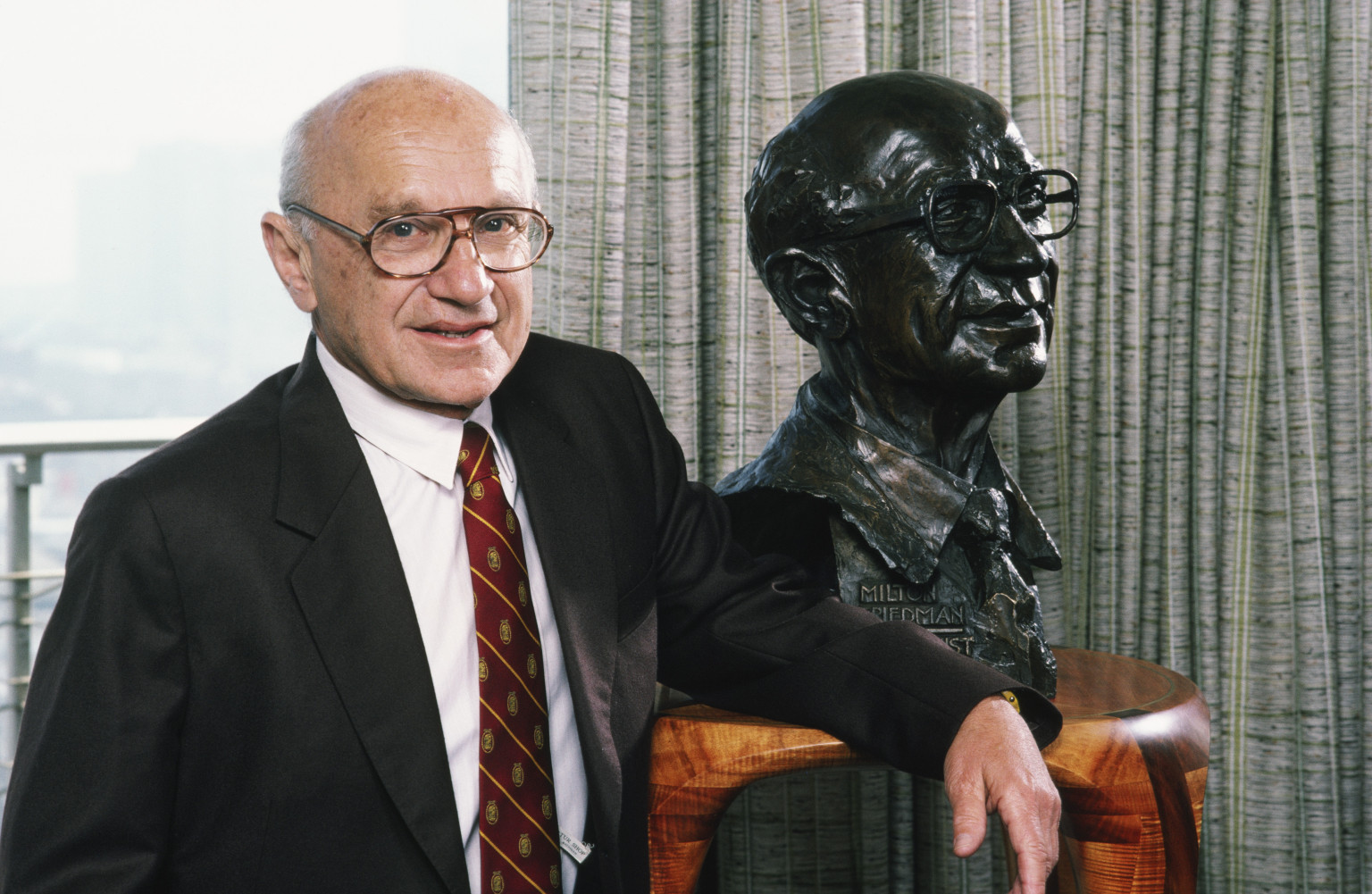
Milton Friedman
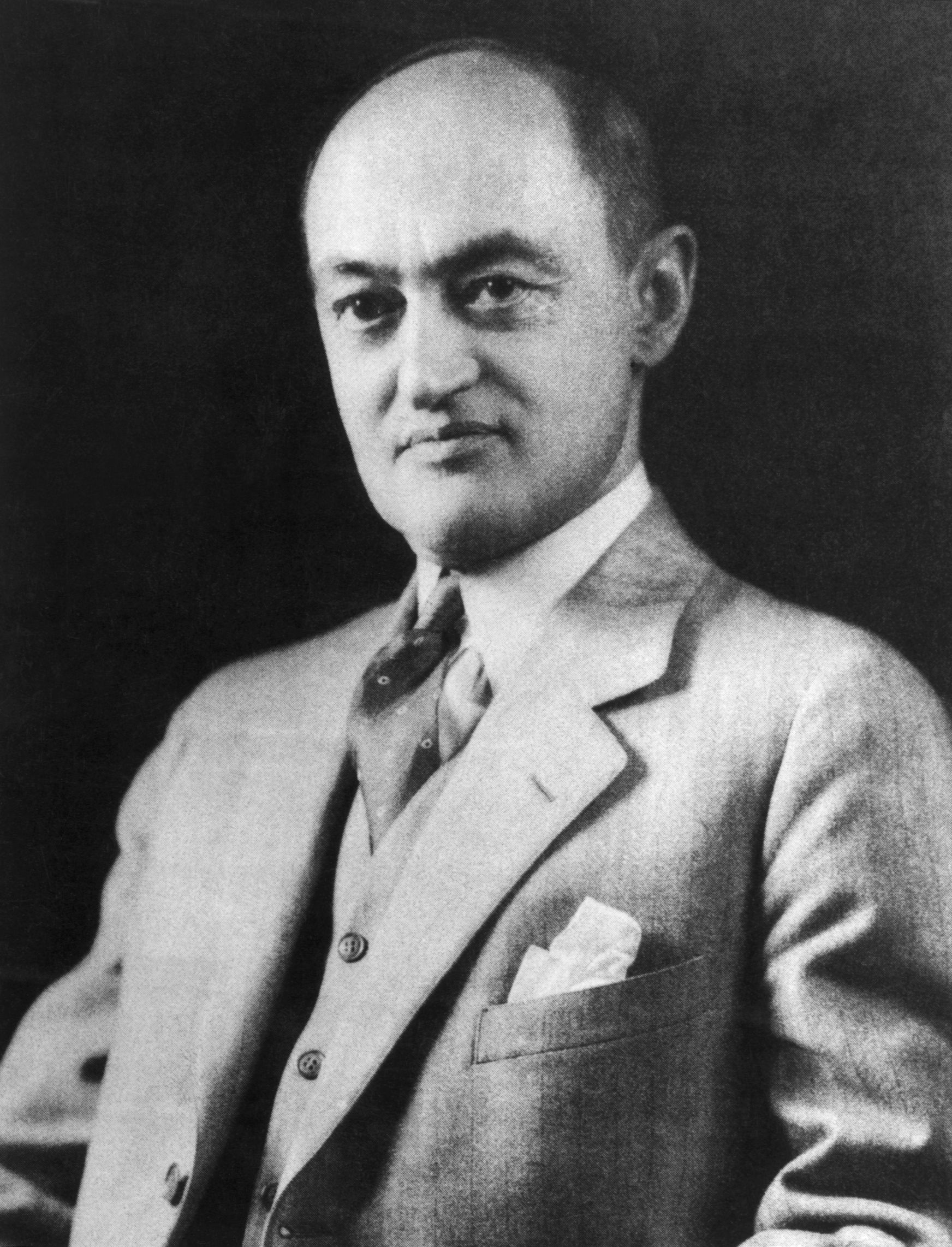
Joseph Schumpeter
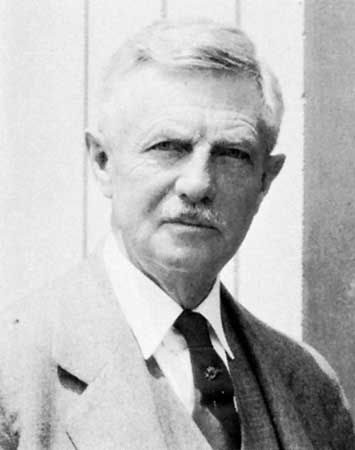
F.J. Turner


Ayn Rand
Norbert Wiener
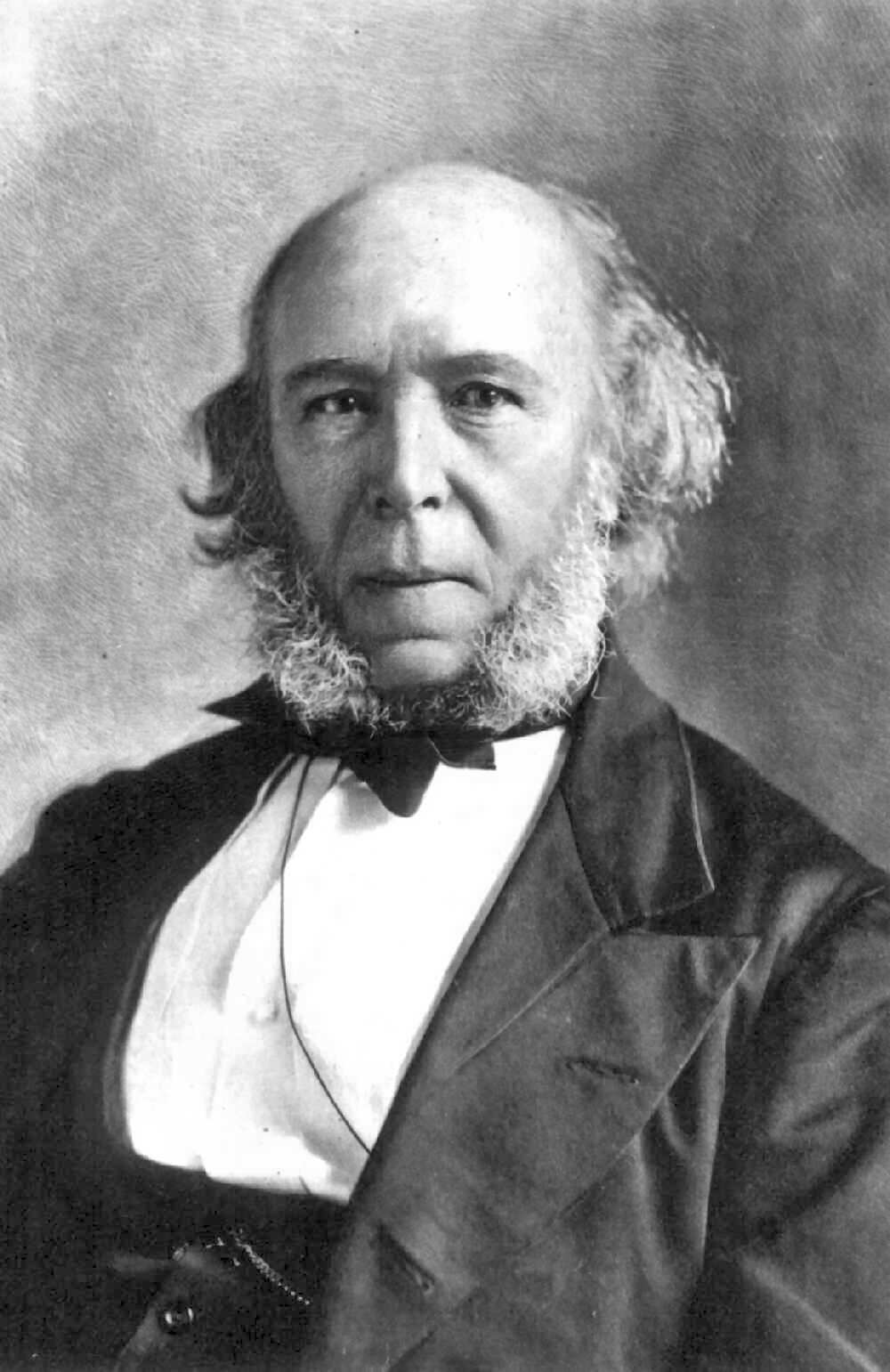
Herbert Spencer
A structured and conquering dogma
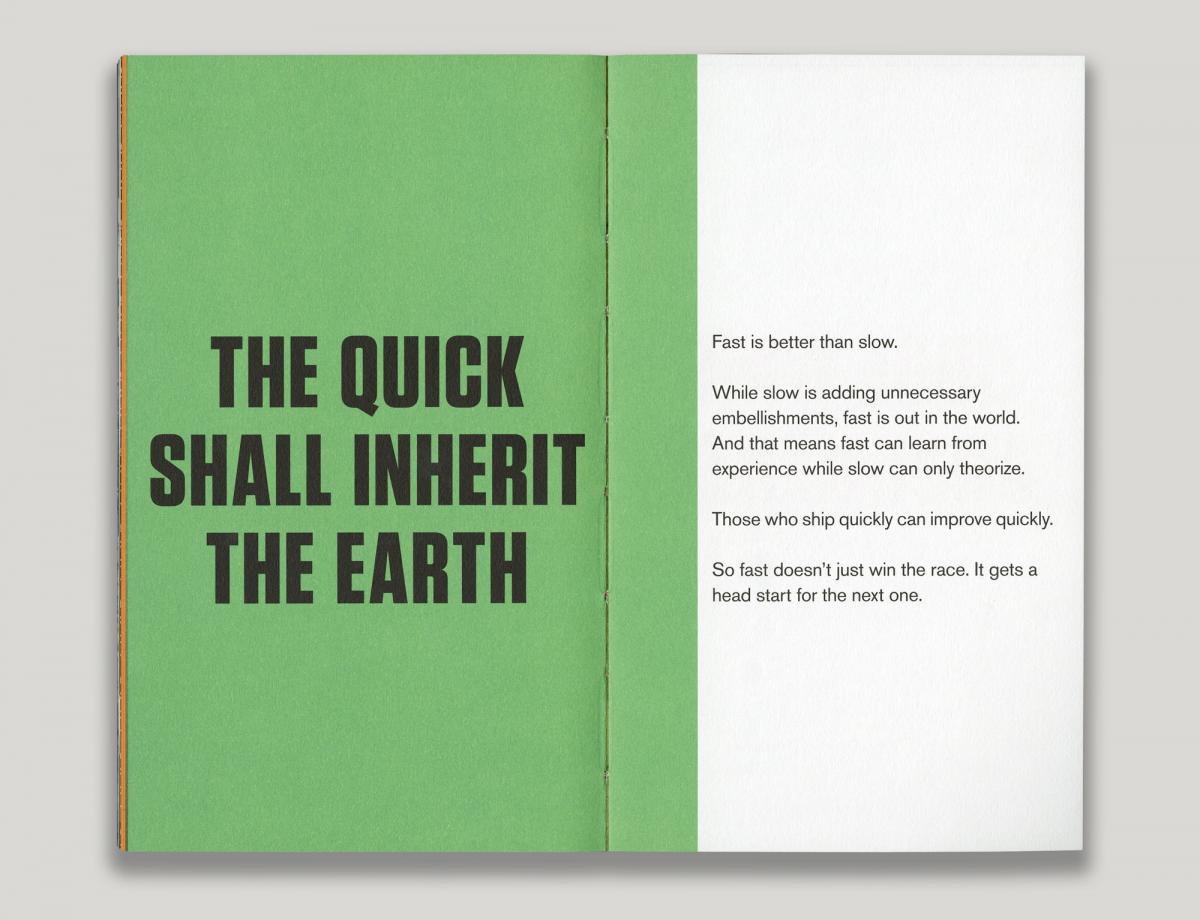
Relayed by its self-proclaimed tech evangelists, this dogma is presented to us all as the inevitable and unquestionable direction of history. A dogma with its commandments, proclaimed without much understanding, by the new seminarians who have earned their place in prestigious startup incubators. "Make the world more open and connected," "Solve a problem," "Grow or die," they are told. The promise? "Change the world."
Why? To create a pseudo-earthly paradise: speed, efficiency, performance, success, comfort — and even immortality, for the most devout believers.
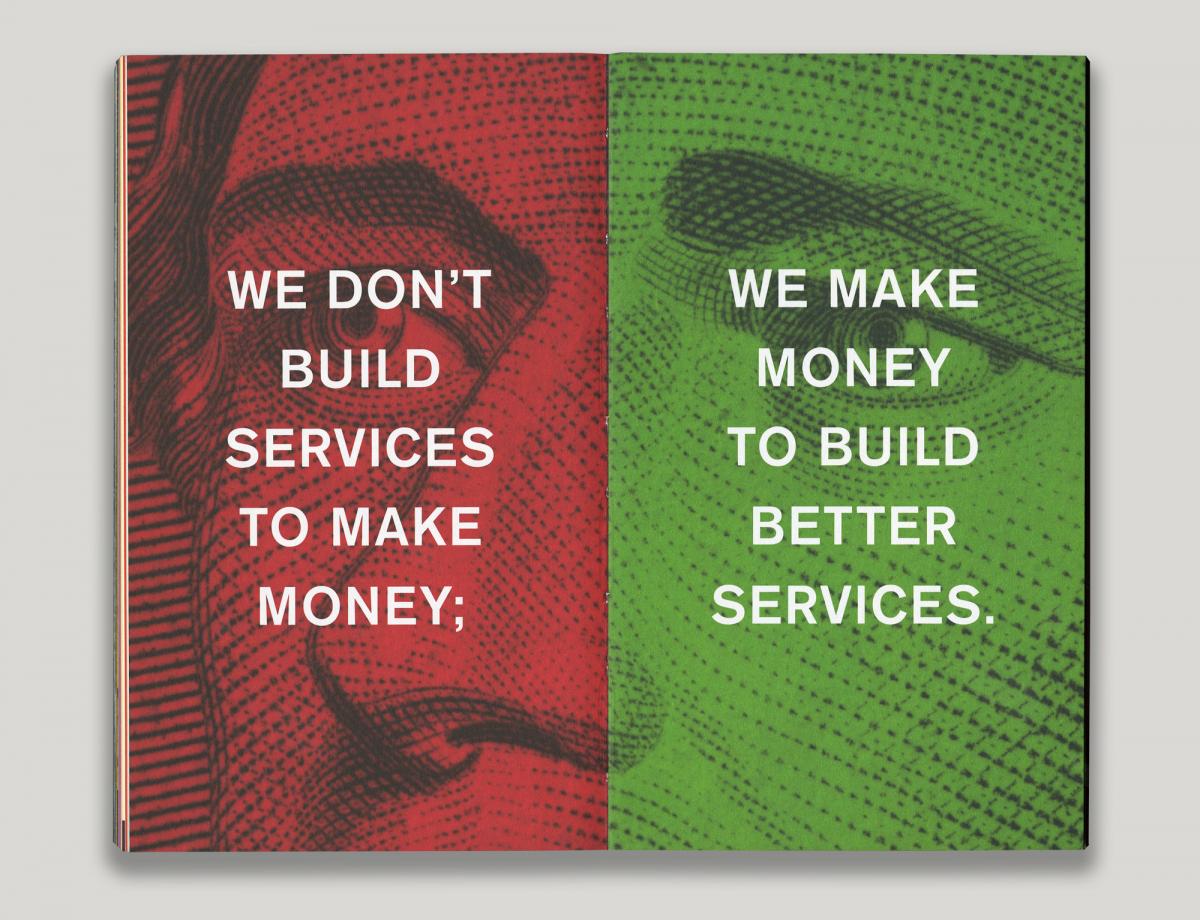
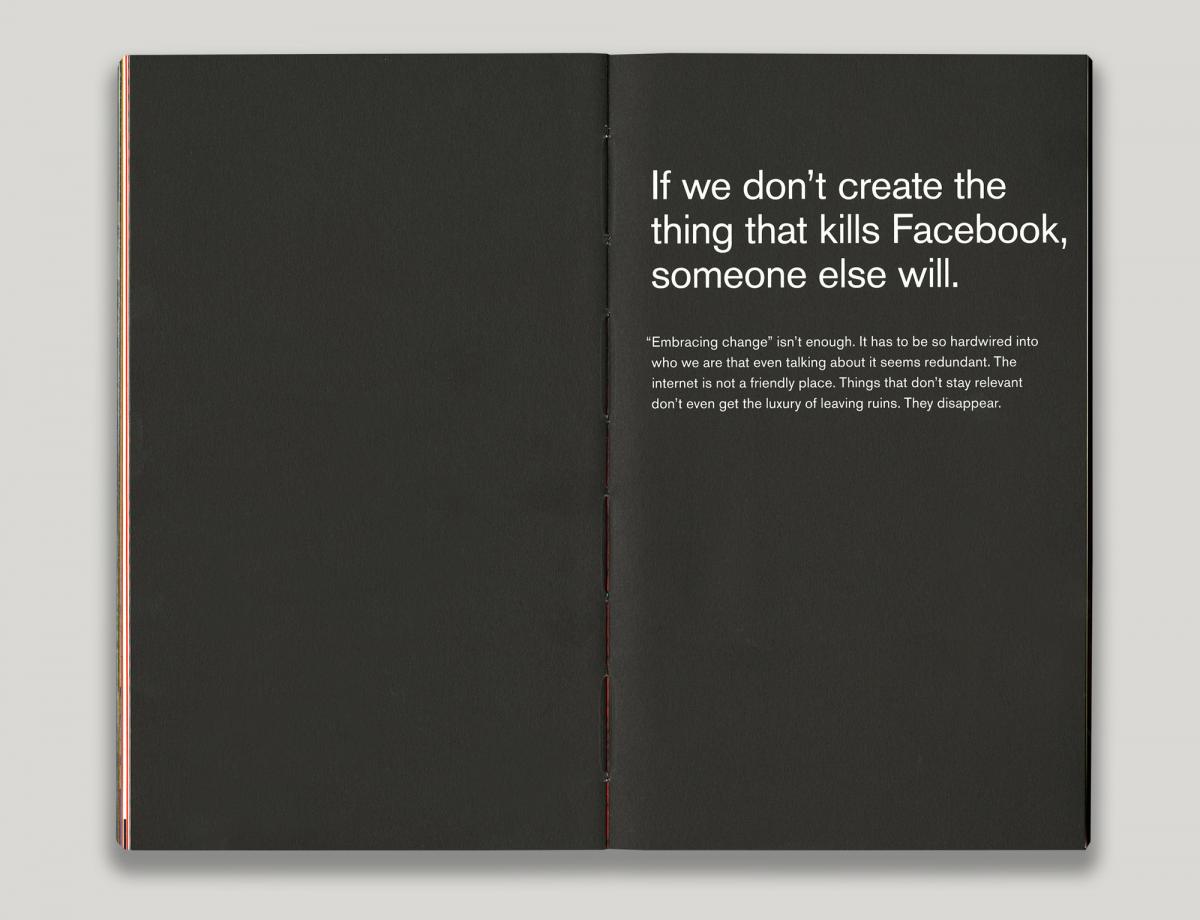
A dogma with its prophecies, explaining to us "why software is eating the world". A dogma with its prophets, like Google, which "lives a few years in the future and sends the rest of us messages". A dogma with its gospels — startups born not in stables, but in garages, in the cradle of the new civilization: Silicon Valley.
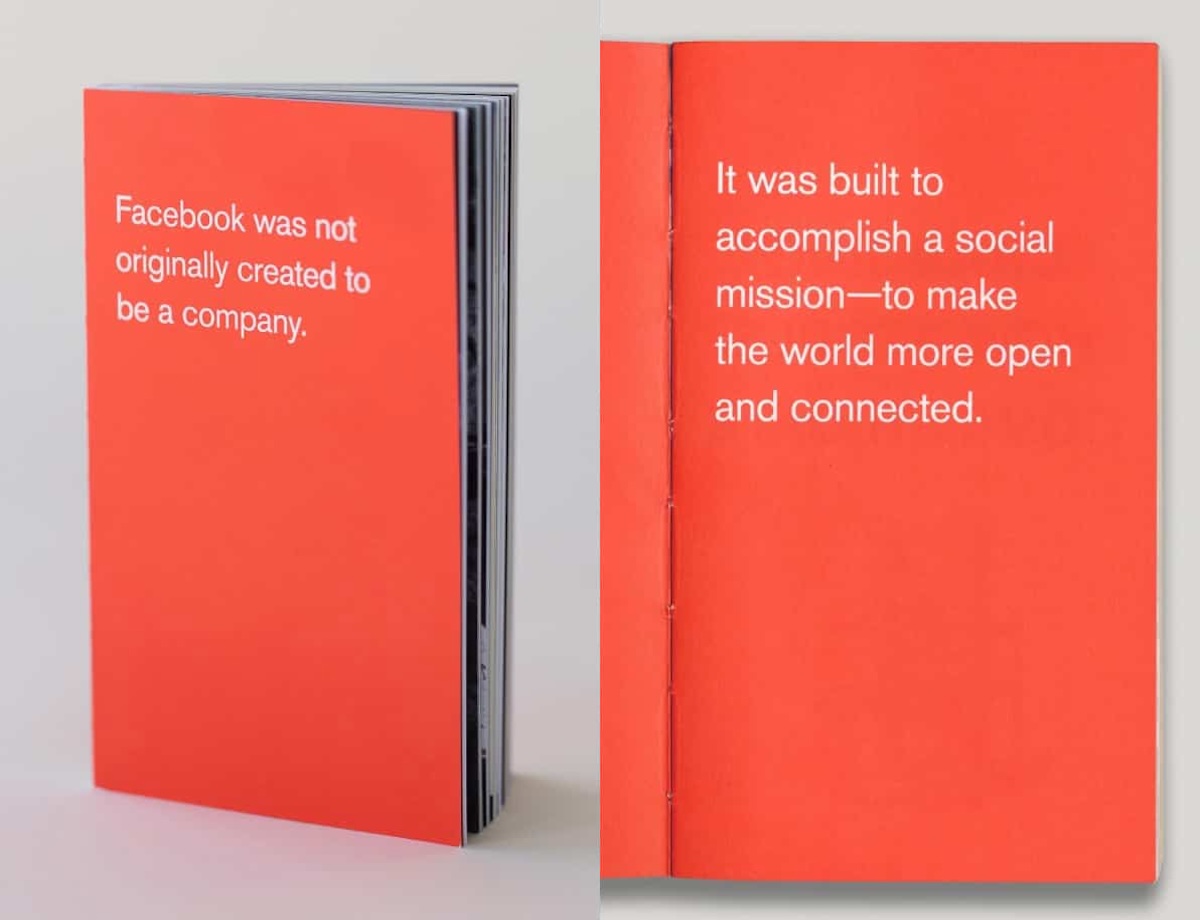
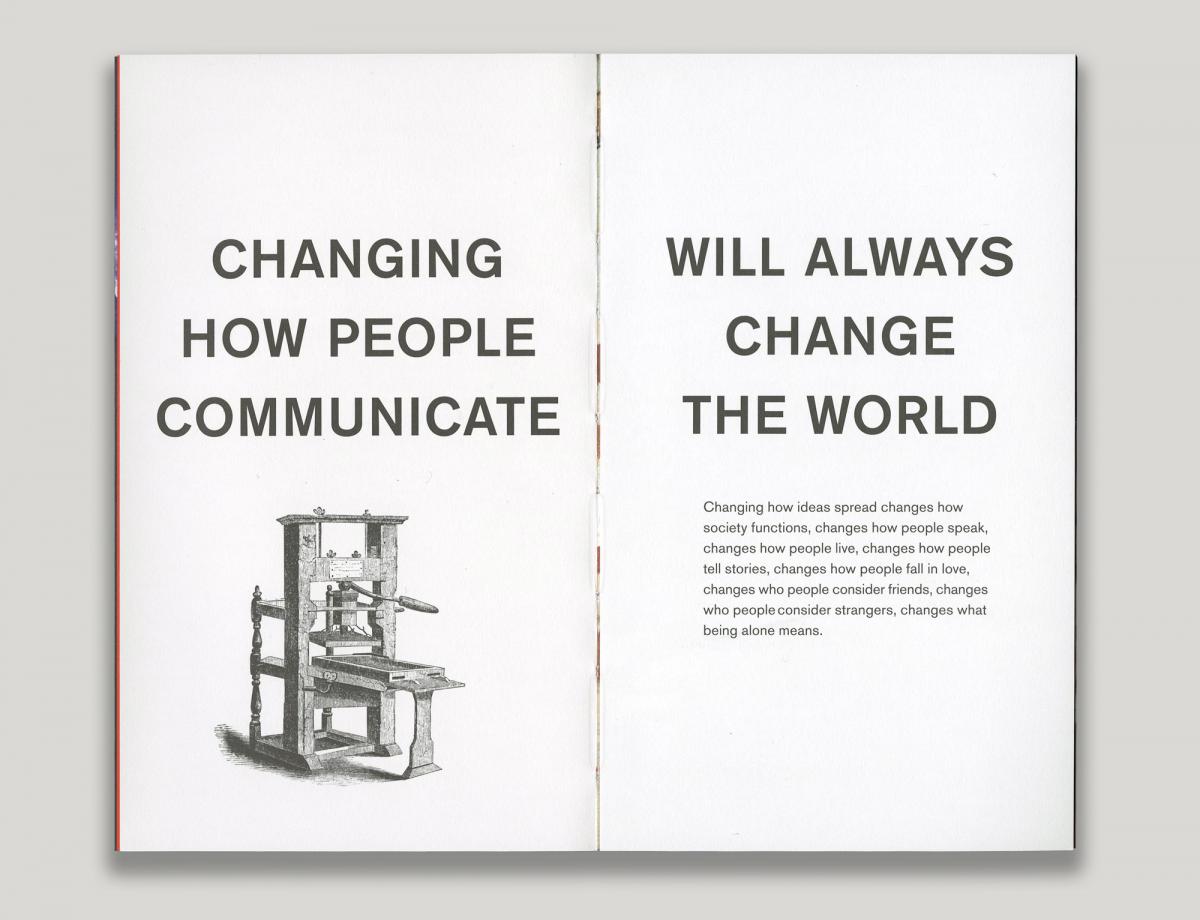
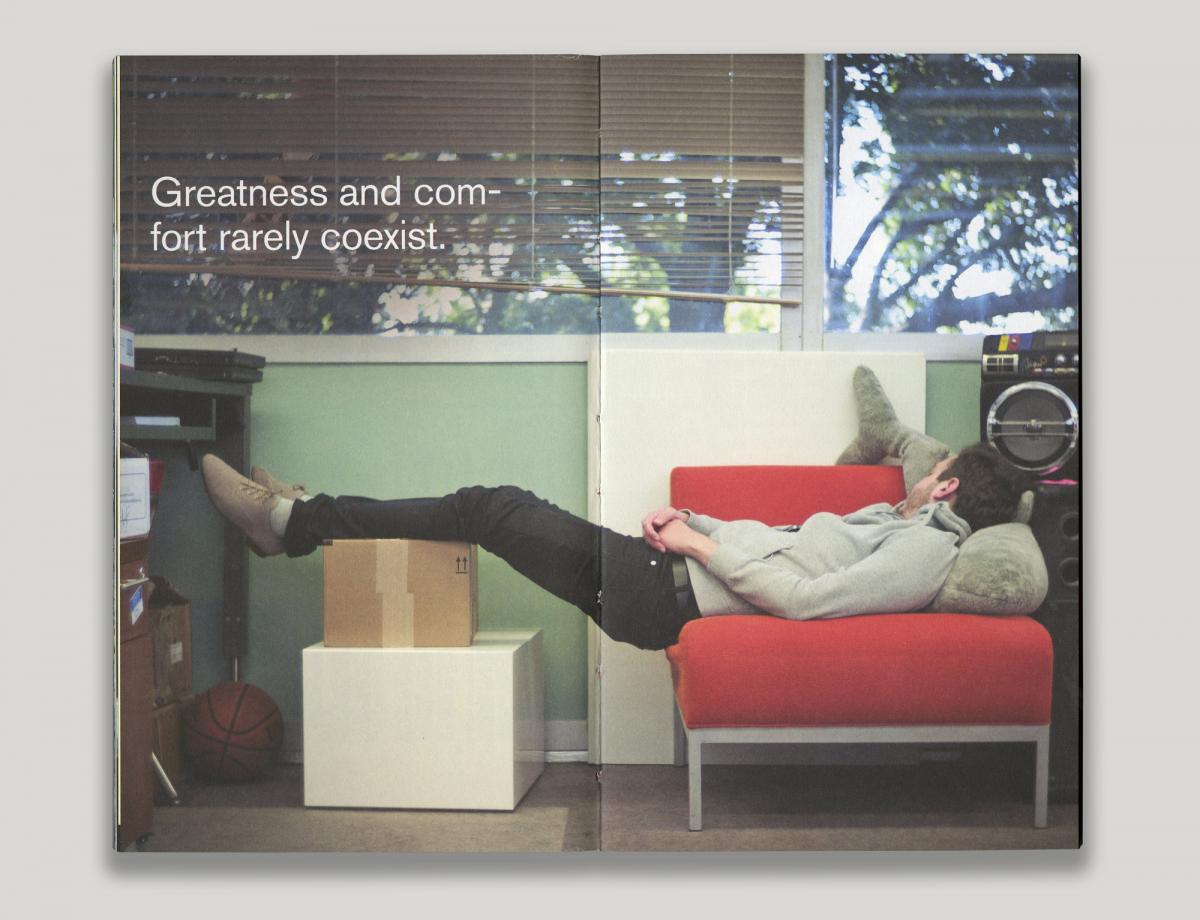
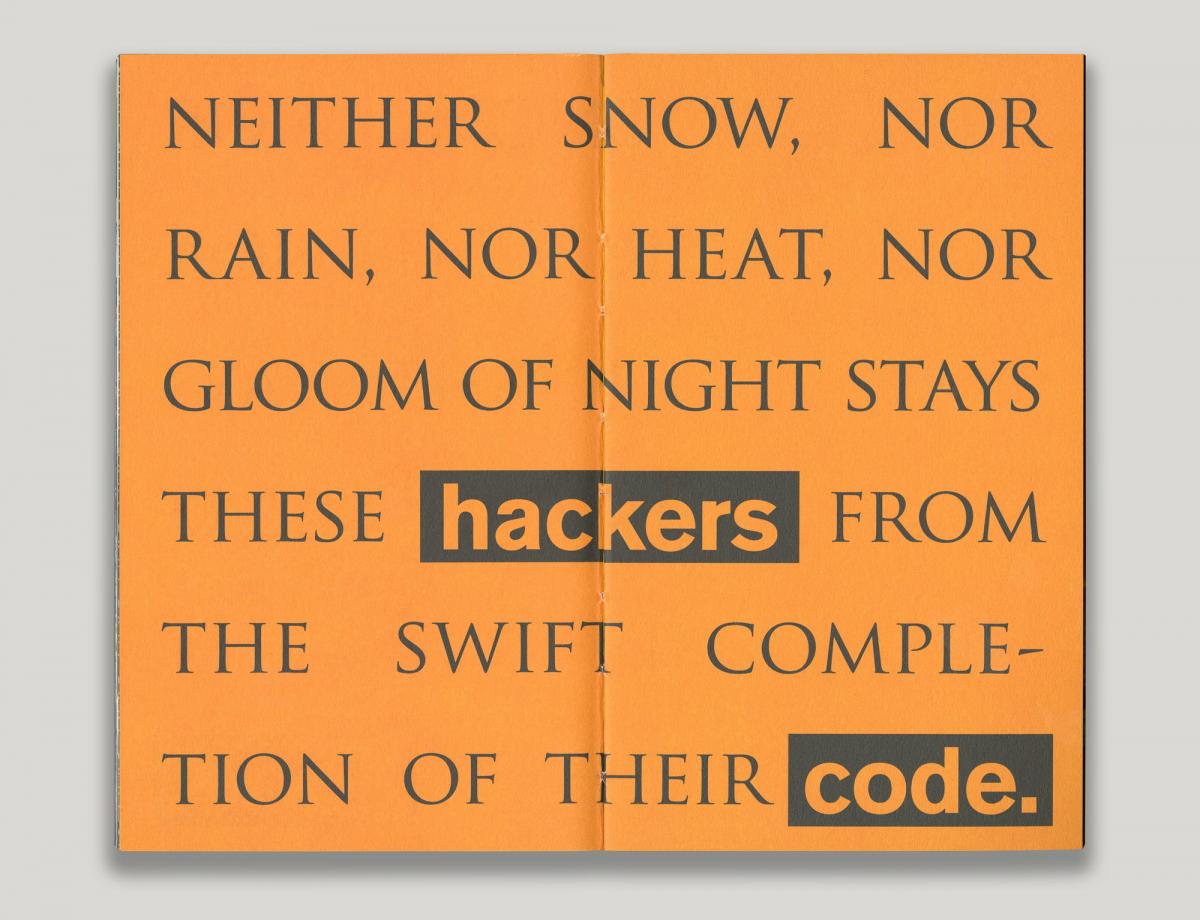
Facebook's "Little Red Book," distributed to employees in 2012 — a true little bible worth discovering.
We have all become believers
Fully converted without even recognizing its codes, we now find ourselves collectively practicing and developing a dogma that never names itself. Ready to sweep away in an instant decades of social progress by letting Uber and Deliveroo impoverish the most vulnerable corners of our cities. Ready to sacrifice our privacy on the altar of apparent freedom and efficiency. Each day, surrendering a little more of our freedom of choice to the sacred algorithms of recommendation. Ready to limit our freedom of movement in exchange for the illusion of security promised by mass surveillance systems. Now unable to truly know or enjoy our cities, as we move like automatons, following the fastest route prescribed by Google Maps. On the verge of undermining the mutual foundations of our societies by promoting personalized — and inevitably discriminatory — insurance schemes. Determined to automate our neighbor's job, and thus, in time, our own. To oppose this is to be branded a "technophobe," a "conservative," a "reactionary," or even a "Luddite."
A dogma synonymous with collective defeat
However determined we may be, no nation — not even an entire continent — can close the technological gap with the Californian giants, nor silence its ethical doubts quickly enough to compete on equal terms and win the battle for the future. The only state seemingly capable of doing so is China — but at what cost? And beyond that: by playing on their field, have we not already lost? Our philosophical heritage, our values, and the social model we once shared find no place in this digital transformation — and are now threatened at their very foundations. The defeat, beyond being economic, is cultural.
« Confronted with what clearly resembles a new cult […], I call for the secularization of technology — a separation between the quasi-religious beliefs some attach to new technologies and the concrete, pragmatic use we ought to make of them. »
Philippe Breton Le culte de l'Internet, 2000
Other forms of technology are possible
In the face of this conquering and destructive dogma, the time for heresy has come. Other forms of technology are possible! Let us reclaim what once made the strength of French culture — its art of living, its law, its philosophy, its industry. Let us create together a form of technology that only we could imagine and shape. A technology that would bring us happiness here, and could be shared elsewhere. A technology that would inspire others to create their own, in their own image. A technology that is humane, tasteful, empowering, measured — a technology for and by wanderers and romantics alike.
This is the only path we see. Let us recover hope, pride, and imagination. Let us debate, regulate, create. But for heaven's sake — let us stop believing!